Cybersecurity in 2025: Advanced solutions to protect your organization
By 2025, cybersecurity is no longer just a technical issue: it has become a strategic priority for businesses and institutions of all sizes.
Technological advances such as artificial intelligence (AI), 5G, and the Internet of Things (IoT) have transformed the digital landscape, creating exceptional opportunities but also multiplying the attack surfaces for cybercriminals. Threats have become more sophisticated, targeted, and persistent, forcing organizations to adopt robust, innovative cybersecurity solutions that are tailored to the challenges of a hyperconnected world.
In this article, we will explore the main cybersecurity trends and threats for 2025, while highlighting concrete examples of solutions deployed by LOGIQE to meet the critical needs of its customers.
Discover why these advanced solutions make Logiqe a trusted partner for securing your systems and data.
Cybersecurity threats and challenges in 2025
Attacks powered by Artificial Intelligence (AI)
AI is no longer just a defensive weapon. Cybercriminals are now using advanced algorithms to carry out highly targeted attack campaigns. By 2025, ransomware, phishing, and malware will rely on machine learning to bypass traditional security systems. For example, hyper-personalized phishing emails can fool even the most cautious employees.
Ransomware: Double Extortion
New-generation ransomware, known as "3.0," combines data encryption with threats to publish sensitive information on the dark web. Companies are facing unprecedented financial and reputational pressure.
Case study: Ascoma
Logiqe deployed an EDR/XDR protection solution for Ascoma, the leading insurance broker in Africa and the Middle East, in response to these threats. This advanced system analyzes suspicious behavior in real time and neutralizes attacks before they can spread.
Cyberwarfare and attacks on critical infrastructure
In 2025, cyberattacks orchestrated by nation states target strategic infrastructure: healthcare, energy, transportation. These massive attacks paralyze entire sectors and require rapid, coordinated responses.
Case study: Léon Bérard Hospital Center
Logiqe secured the hospital's networks with a SOC (Security Operations Center) system that operates 24/7. Thanks to advanced tools such as EDR/XDR and Fortinet firewall security policies, the hospital center can now respond quickly to any intrusion attempts, ensuring the security of critical data and continuity of care.
Risks associated with Connected Objects (IoT)
With billions of connected devices (cameras, thermostats, medical devices), hackers exploit vulnerabilities in these objects to penetrate corporate networks.
The vulnerability of cloud environments
Cloud storage is booming, but if poorly configured, it becomes a prime target for hackers. Attacks targeting cloud environments result in massive data leaks.
Advanced solutions: Anticipate and neutralize cyber threats
To protect your information systems in 2025, it is essential to rely on robust, flexible, and innovative solutions. Here are the main strategies adopted by Logiqe to guarantee cybersecurity for its customers:
1. Deployment of EDR/XDR solutions for proactive protection
Endpoint Detection & Response (EDR) and Extended Detection & Response (XDR) enable cyberattacks to be identified and neutralized in real time.
Concrete example: Valbonne Sophia Antipolis Town Hall
For this local government agency, Logiqe deployed a comprehensive protection infrastructure covering email, servers, and workstations. Thanks to 24/7 monitoring via the SOC, any suspicious activity is detected and eliminated before it can cause damage.
2. Compliance and Security Policy Management
Regulations (GDPR, NIS 2, etc.) require companies to follow strict security policies to protect personal and sensitive data.
Case study: Byblos (Saint-Tropez)
Logiqe secured the Active Directory and implemented a comprehensive backup solution, ensuring compliance with standards and the resilience of the luxury hotel group's critical data.
3. Securing email traffic
Email remains the primary vector for cyberattacks. The solutions offered by Logiqe include communication encryption, threat detection (phishing, malicious spam), and email flow security.
Example: Privatam (Monaco)
For this company, Logiqe secured the entire communication system, including an encrypted messaging system and a highly protected WLAN/WiFi infrastructure.
4. Audit and standardization of IT infrastructure
A consistent and standardized infrastructure reduces risks associated with configuration flaws.
Case study: Ascoma
Logiqe revamped the IT infrastructure of this insurance giant: setting up a group firewall, renewing the virtualization infrastructure for 29 subsidiaries, and standardizing the LAN network. These actions led to a significant reduction in security incidents.
5. Employee awareness and training
In 2024, human error remained the cause of 90% of cyberattacks ( source: Francenum.gouv.fr). Logiqe offers customized cybersecurity training and awareness programs to transform your employees into effective defenses against cyber threats.
Key Cybersecurity Trends to Watch in 2025
AI-powered cybersecurity
Predictive algorithms are becoming an essential tool for detecting anomalies before they become threats. Logiqe integrates AI-based tools into its SOC solutions to anticipate the most sophisticated cyberattacks.
Cyber insurance: Preparing for the post-crisis period
In the event of an incident, cyber insurance covers financial losses, provided that sufficient security measures are in place. Logiqe supports its clients in complying with insurers' requirements.
Security-Operations Collaboration (SecOps)
The SecOps approach, which integrates security at the heart of IT operations, will be crucial in 2025. Logiqe's outsourced SOC solutions provide proactive 24/7 monitoring and immediate response to incidents.
Why choose Logiqe?
Logiqe is positioned as a leader in cybersecurity thanks to its proven expertise and tailor-made solutions, adapted to the specific needs of each sector:
Comprehensive support: From initial audit to operational monitoring, Logiqe covers every stage of your cybersecurity strategy.
A diverse and prestigious client portfolio: With successful projects for organizations such as Ascoma, the Léon Bérard Hospital Center, and the Valbonne Town Hall, Logiqe has proven its ability to secure the systems of even the most demanding companies.
24/7 availability: SOC and EDR/XDR services provide proactive protection and rapid response to every incident.
Conclusion: Cybersecurity as a strategic investment
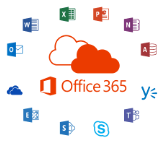
Here are the main reasons to hire an expert to configure Microsoft 365:
- Enhanced security: Ensure sensitive data is protected with the correct Microsoft Intune and Azure AD configurations.
- Productivity optimization: Optimal use of tools such as SharePoint, Teams, and COPILOT.
- Customization of solutions: Adapting Microsoft 365 to the specific needs of the company.
- Compliance and regulation: Ensuring compliance with security standards and the GDPR.
- Advanced technical support: Respond effectively to complex issues with qualified experts.
When faced with complexity, the answer is LOGIQE: streamlined cybersecurity.
The LOGIQE Audit is designed to provide you with an accurate and realistic analysis of your IT infrastructure.
Cybersecurity 2025 FAQ: Comprehensive answers to key questions
Cybersecurity is a complex subject, often shrouded in mystery for business decision-makers and IT managers. With technologies and threats evolving rapidly, it is essential to understand the fundamental concepts and advanced solutions available to protect your systems.
Here is a detailed FAQ that answers the most common questions about cybersecurity in 2025, while highlighting essential technical terms such as outsourced SOCs, EDR/XDR, and firewall security policy management.
What is an outsourced SOC (Security Operations Center)?
An outsourced SOC (or outsourced Security Operations Center) is a cybersecurity service provided by a specialized company such as LOGIQE. It is a structure dedicated to monitoring, analyzing, and responding to security incidents, but operated by a third-party provider 24 hours a day, 7 days a week.
What are the advantages of an outsourced SOC?
- Continuous monitoring: Your infrastructure is protected at all times, even outside of working hours.
- Proactive threat detection: Tools such asEDR/XDR identify and neutralize threats before they cause damage.
- Cost reduction: Setting up an internal SOC is expensive and requires significant human and technological resources. Outsourcing allows you to save money while benefiting from a high-performance service.
- Specialized expertise: Outsourced SOCs are managed by cybersecurity experts who can respond quickly to complex attacks.
What is the difference between EDR and XDR?
EDR (Endpoint Detection & Response) and XDR (Extended Detection & Response) are advanced technologies used to detect and respond to cyberattacks.
EDR (Endpoint Detection & Response)
EDR focuses solely on endpoints (computers, servers, mobile devices). It enables you to:
Monitor suspicious activity on endpoints in real time.
Quickly neutralize malware before it spreads.
XDR (Extended Detection & Response)
XDR goes further by integrating endpoint, network, email, and cloud environment monitoring into a single centralized solution.
Threat correlation: It connects data from different points to identify complex attack patterns.
Customer example:
Logiqe deployed an advanced EDR/XDR system for the Léon Bérard Hospital Center, enabling proactive monitoring and comprehensive protection of servers, workstations, and email traffic.
Why is managing firewall security policies essential?
Firewalls play a central role in cybersecurity by acting as a barrier between your internal network and external threats. However, for a firewall to be effective, it must be configured correctly and updated regularly.
What is a firewall security policy?
A firewall security policy defines the rules that control:
- What types of traffic (data) are allowed to enter or leave the network?
- How users and devices can access critical resources.
Why outsource firewall security policy management?
- Increasing complexity: With hybrid infrastructures (cloud, on-premise), it is becoming increasingly difficult to manage firewall rules manually.
- Continuous optimization: Outsourced management ensures that your firewall is always aligned with best practices and adapted to new threats.
Customer example:
Logiqe managed firewall security policies for the Valbonne Sophia Antipolis Town Hall, effectively securing data flows between email, servers, and workstations.
What are the solutions for securing messaging flows?
Email remains the primary vector for cybercriminal attacks, particularly through phishing or malware. Securing email traffic is therefore crucial to reducing risks.
What solutions are available?
- Spam and phishing filtering: Blocks malicious emails before they reach inboxes.
- Email encryption: Ensures that only authorized recipients can read messages.
- DMARC, DKIM, and SPF authentication: Prevents identity theft by verifying the legitimacy of senders.
- Behavioral analysis: Identifies suspicious emails based on user habits.
Customer example:
Logiqe secured Privatam's email traffic by implementing an advanced encryption solution and threat detection tools to prevent phishing attacks.
What is virtualization and why is it important for security?
Virtualization involves creating multiple virtual environments or systems (such as servers or workstations) on a single piece of physical hardware. This allows for optimal use of resources and improves resilience.
Why does virtualization enhance cybersecurity?
- Isolation of environments: If one virtual system is compromised, the others remain protected.
- Quick backup and restore: In the event of a cyberattack, it is easy to restore a healthy environment.
- Centralized control: Virtualized resources can be monitored and managed from a single interface.
Customer example:
For Geg Management, Logiqe deployed a comprehensive virtualization and backup infrastructure to protect critical data and ensure business continuity.
Why outsource your cybersecurity?
With threats on the rise, outsourcing cybersecurity is often the best option for companies that lack the necessary internal resources or expertise.
Benefits of outsourcing with experts like Logiqe:
- Advanced expertise: Specialized providers have in-depth knowledge of the latest threats and technologies (outsourced SOCs, XDR, etc.).
- 24/7 monitoring: Constant vigilance that allows for immediate detection and intervention in the event of an incident.
- Cost reduction: No need to invest in expensive tools or train internal staff.
- Compliance: Experts ensure that your systems meet regulatory requirements (GDPR, ISO 27001, etc.).
What are the major cybersecurity trends for 2025?
- Widespread adoption of XDR for integrated, comprehensive protection.
- Cybersecurity in the cloud: With the migration of infrastructures to the cloud, tools such as encryption and network segmentation are essential.
- Stronger regulations: Europe is imposing stricter compliance requirements with regulations such as the NIS 2 Directive.
- Cyberwarfare and state threats: Attacks orchestrated by states target critical infrastructure (hospitals, energy).
- AI and machine learning: Tools based on artificial intelligence can detect unknown threats by analyzing abnormal behavior.
How much does a cybersecurity audit cost?
The cost of a cybersecurity audit depends on several factors:
- The size of your company.
- The complexity of your infrastructure (on-premises, cloud, hybrid).
- The objectives of the audit (compliance verification, intrusion testing, etc.).
At Logiqe, audits are customized and enable:
- Identify existing vulnerabilities.
- To recommend solutions tailored to your needs.
Contact the LOGIQE team for a free quote and analysis of your needs.