Data Loss Prevention (DLP) encompasses all tools and strategies designed to prevent the loss, theft, or unauthorized disclosure of sensitive information. It acts as a cross-functional layer of protection for your information system: emails, workstations, cloud, printers, file transfers, etc.
Its objective is clear: to preserve the confidentiality, integrity, and traceability of critical data, while adapting to modern uses (mobility, remote working, cloud computing) and growing regulatory requirements (GDPR, NIS2, ISO 27001).
What is data loss prevention or DLP?
Why implement a DLP solution?
- Identify and classify sensitive data (HR, finance, customer data, health, etc.)
- Monitor their circulation across all channels (email, web, USB, cloud, etc.)
- Automatically alert or block unauthorized transfers
- To comply with regulatory obligations (GDPR, NIS2, HDS, etc.)
Our DLP approach: visibility, control, compliance
Step 1: Mapping and classifying data
Identification of critical files via automated scans (metadata, content, locations)
Use of Microsoft Purview privacy labels or other equivalent solutions
Analysis of internal/external flows (cloud, workstation, email)
Step 2: Defining prevention policies
Automatic blocking of sensitive information (e.g., card numbers, health data)
Control of USB transfers, printing, and network sharing
Logging of actions, alerts, and validation workflows
Step 3: Integration with existing tools
Microsoft Purview Data Loss Prevention (formerly MIP/AIP)
DLP integration with Exchange Online, SharePoint, OneDrive, Teams
Deployment on workstations, servers, cloud, web gateways
Tangible benefits for your business
- Risk reduction: critical data is monitored and protected in real time.
- Complete traceability: every attempt to leak data is recorded and can be analyzed during an audit.
- Enhanced compliance: GDPR, NIS2, ISO 27001, HDS... DLP is a key compliance tool.
- Reduction of human error: integrated awareness and automated corrective actions.
- Centralization: simplified management of security policies at the global level.
DLP solutions integrated into your IT ecosystem
LOGIQE works with market-leading DLP technologies, depending on your infrastructure:
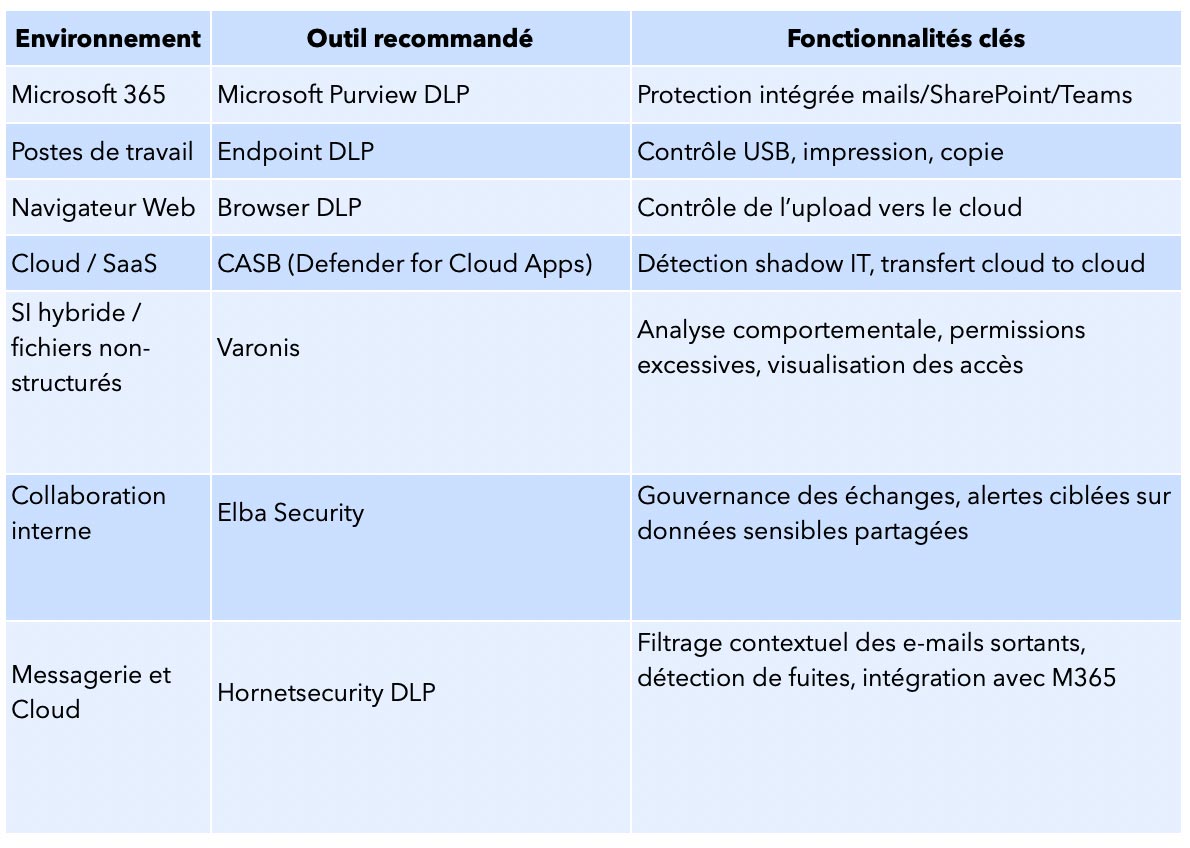
We handle the configuration, integration, testing, and documentation of each DLP component, with comprehensive support (management, training, documentation, regulatory monitoring).
Customer cases: Customized DLP in critical environments
- Industrial SME: automatic blocking of technical file transfers outside the EU, management of printers and USB ports on sensitive workstations.
- Local government: deployment of Microsoft DLP to monitor the sending of HR information by email and via OneDrive.
- Private clinic: DLP integration with HDS, tracking of patient file consultations, sector-specific rules on health data.
Why choose LOGIQE for your DLP project?
- Microsoft, Forcepoint, Trellix, Broadcom (Symantec) DLP expertise
- Gradual deployment, tailored to your maturity and constraints
- Training IT teams and raising user awareness
- Full alignment with GDPR, NIS2, and industry-specific obligations
- Automated reporting for the IT department, the CISO, or external authorities
FAQ – Data Loss Prevention (DLP)
Is a DLP solution mandatory?
No, but it is strongly recommended as soon as the organization manages sensitive data or must comply with regulatory obligations.
Does DLP slow down employees' work?
Not if it is properly configured: the solution provides support and alerts, but does not prevent legitimate actions.
How long does it take to implement a DLP project?
On average, between 3 and 6 weeks, depending on the scope. LOGIQE offers rapid POCs to assess the effectiveness of the solution.