IT Cybersecurity Audit: detect vulnerabilities and strengthen your protection
A cybersecurity audit detects vulnerabilities in your systems, strengthens the protection of sensitive data, and ensures compliance with GDPR and ISO 27001 standards.
Ensure the security of your systems and infrastructure with the expertise of LOGIQE, a cybersecurity specialist.
IT security is now a crucial issue for businesses of all sizes.
But what is a cybersecurity audit and why is it essential? A cybersecurity audit is a detailed assessment designed to identify vulnerabilities in your infrastructure, evaluate the associated risks, and recommend practical solutions. This process is essential for ensuring the security of sensitive data, complying with legal standards such as GDPR and ISO 27001, and preventing cyberattacks.
This article explains in detail the importance of an audit, the steps involved, and how LOGIQE, an expert in cybersecurity, can support you in this process.
What is an IT cybersecurity audit?
An IT cybersecurity audit is a comprehensive analysis of your infrastructure, processes, and security systems. It aims to:
- Identify vulnerabilities in your systems and networks.
- Assess the risks that threaten your sensitive data.
- Propose corrective measures to enhance your security and ensure compliance with legal and industry standards.
- Ensure compliance with regulations such as GDPR and ISO 27001.
This approach is crucial for CIOs and CISOs who are keen to prevent cyberattacks, but also to comply with current regulations.
Why is it essential?
The challenges of cybersecurity today
Cyber threats are evolving rapidly, rendering traditional security approaches obsolete. Whether you are an SME or a large enterprise, regular auditing allows you to:
- Prevent cyberattacks before they cause irreversible damage.
- Strengthen the trust of your customers and partners with secure systems.
- Avoid financial penalties due to regulatory non-compliance.
The importance of regulatory compliance
Many companies today must comply with strict cybersecurity regulations. Among the most important are:
- GDPR (General Data Protection Regulation): This European legislation imposes high standards for the protection of personal data. A cybersecurity audit ensures that technical and organizational measures comply with GDPR requirements.
- ISO 27001: This international standard defines best practices for information security management. An audit allows you to verify compliance with this standard and, if necessary, obtain ISO certification.
- NIS Directive : This European directive is aimed at operators of essential services and requires high levels of cybersecurity.
By conducting a cybersecurity audit, you not only ensure the protection of your systems, but you also avoid financial penalties for non-compliance.
A comprehensive solution for your cyber protection
A cybersecurity audit is an essential step for any company that wants to guarantee the security of sensitive data and protect its infrastructure against growing threats. By conducting an IT audit, you can identify critical vulnerabilities in your networks, strengthen your systems against cyberattacks, and ensure optimal data protection.
Whether it is to comply with international standards such as ISO 27001 or to meet GDPR requirements, this audit helps prevent risks, improve your performance, and establish truly proactive cybersecurity.
With LOGIQE, benefit from a personalized approach to protect your critical information and strengthen your cyber protection strategy for the long term.
Key steps in an IT cybersecurity audit
An audit takes place in several phases, each aimed at providing a clear picture of your organization's security:
- Information gathering: In-depth analysis of existing infrastructure, software, and security protocols.
- Identification of vulnerabilities: Penetration testing, firewall analysis, antivirus, access management, and backup practices.
- Risk assessment: Classification of vulnerabilities according to their criticality and potential impact.
- Detailed report and recommendations: A comprehensive report is provided, including a roadmap for correcting the identified flaws.
- Implementation and monitoring: LOGIQE supports companies in implementing corrective measures and provides rigorous monitoring to ensure long-term security.
The different types of cybersecurity audits
Depending on the specific needs of your company, there are several types of audits that can be performed:
- Organizational audit: Evaluates internal procedures and practices, access management, and employee cybersecurity training.
- Technical audit: Focuses on analyzing technical infrastructure, software, networks, and data management systems.
- Compliance audit: Aims to ensure that the company's security practices comply with current regulations (GDPR, ISO, etc.).
- Penetration audit: Simulates a real attack to test the resistance of systems against external intrusion.
A comprehensive audit can combine these different approaches to provide a complete picture of your organization's security.
Specific tools and technologies: strengthening audits with advanced technical solutions
During a cybersecurity audit, several tools and technologies can be used to identify vulnerabilities and assess the state of IT security.
For example, vulnerability scanners such as Nessus or Qualys can detect flaws in systems, networks, and applications. Network analysis tools such as Wireshark or SolarWinds monitor network traffic to identify potential malicious behavior.
Penetration testing solutions such as Metasploit simulate cyberattacks to test the robustness of infrastructures.
Finally, SIEM (Security Information and Event Management) platforms help centralize and analyze security events to quickly detect anomalies. Using these tools provides an accurate and comprehensive view of risks so they can be better addressed.
Actionable recommendations: immediate steps to improve cybersecurity
Here are some concrete actions that companies can implement right now to strengthen their security:
- Regularly update systems and software to reduce known vulnerabilities.
- Use of strong, unique passwords, supplemented by multi-factor authentication (MFA).
- Training employees to recognize phishing attempts.
- Segment the network to limit the spread of internal attacks.
- Regularly back up critical data and test recovery processes.
- Configurer un pare-feu et une solution antivirus performants.
Ces bonnes pratiques permettent de limiter les risques même avant de réaliser un audit complet.
The concrete benefits of an audit focused on the cybersecurity of your infrastructure
An IT cybersecurity audit offers numerous benefits:
- Risk reduction: You identify and fix vulnerabilities before they can be exploited by cybercriminals.
- Legal compliance: By complying with regulations such as the GDPR, you avoid fines and penalties while strengthening the trust of customers and partners.
- Protection of sensitive data: Your crucial information (customer data, financial data, etc.) is better protected against attacks.
- Improved performance: Secure, optimized systems reduce the risk of outages or interruptions due to cyberattacks.
Why choose LOGIQE for your IT audit?
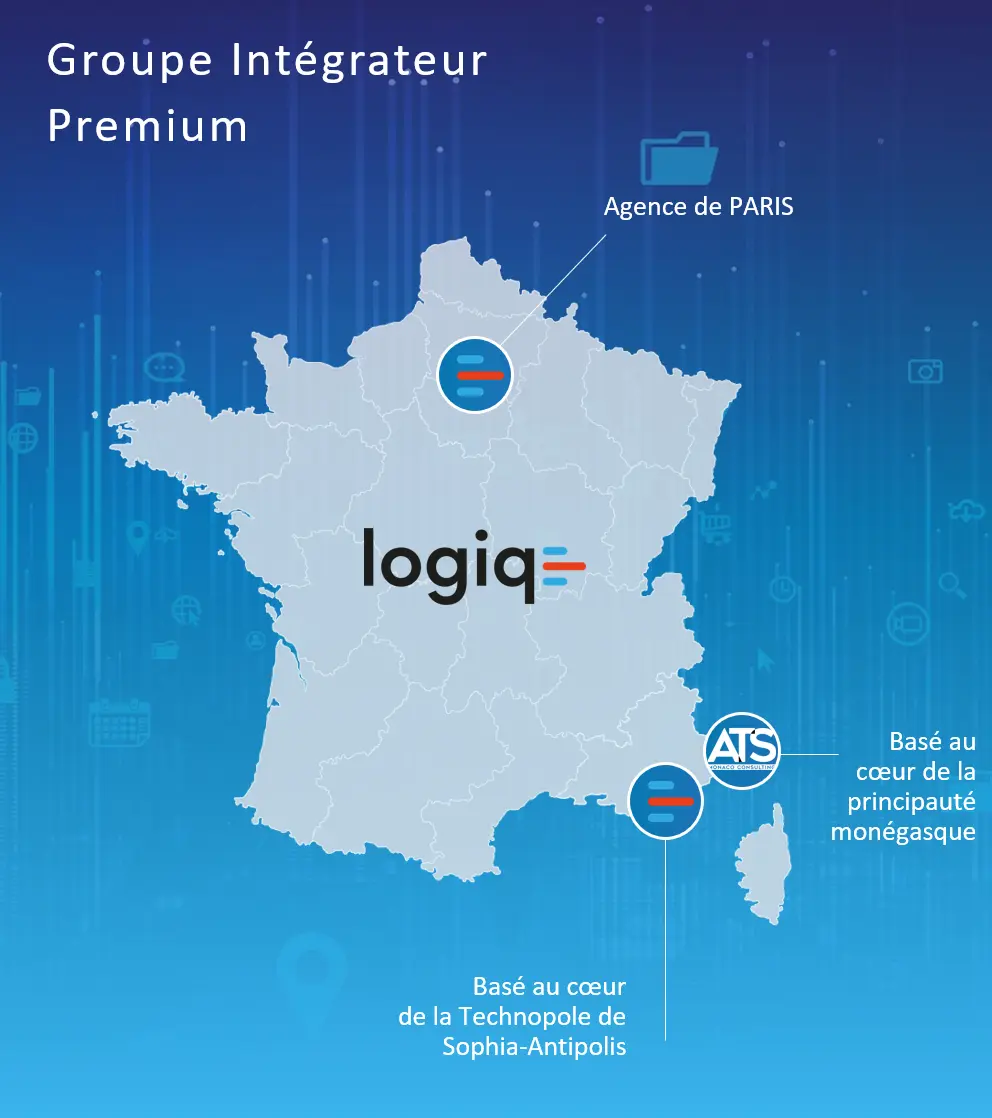
With our expertise in cybersecurity and our local presence on the French Riviera and in Paris, LOGIQE offers a personalized approach to each audit. Our teams are certified and have both technical and regulatory expertise. We support you every step of the way to:
- Ensure total protection for your infrastructure.
- Ensure compliance with applicable regulations.
- Optimize your security processes by offering you practical and tailored solutions.
Sector focus: tailored approaches for each area of activity
Each sector has specific cybersecurity needs. In the healthcare sector, protecting sensitive patient data is a priority, in compliance with regulatory requirements such as the GDPR and the HDS (Health Data Hosting) standard.
For the financial sector, the focus is on securing online transactions and preventing fraud through regular penetration testing. SMEs, which are often the target of cyberattacks due to their limited resources, particularly benefit from organizational audits to optimize their security with solutions tailored to their size and budget.
By offering specific approaches, Logiqe demonstrates a deep understanding of the issues specific to each field.
Discover some of our IT client referencesto get an idea of the specific nature of our expertise.
To find out how Logiqe can help you strengthen your cybersecurity, contact us now by phone or via our form.
Frequently Asked Questions (FAQ Cybersecurity Audit)
What is a cybersecurity audit, and can you give an example?
A cybersecurity audit involves assessing a company's IT systems to identify vulnerabilities and improve security. An example of an audit includes evaluating security protocols, firewalls, and encryption measures for sensitive data. For more information on best practices, you can consult the ANSSI essentials.
How long does an IT cybersecurity audit take?
The duration varies depending on the size of your company and the complexity of your infrastructure, but a typical audit lasts between 1 and 3 days.
What are the signs that an audit is necessary?
An audit is recommended if you have recently deployed new systems, suffered a cyberattack, or have never conducted a thorough assessment of your infrastructure's security.
Does an IT audit guarantee the total security of my system and networks?
An audit can significantly enhance security, but total cybersecurity requires continuous monitoring and regular adjustments.
How does artificial intelligence (AI) enhance data protection in cybersecurity?
Artificial intelligence (AI) is playing an increasingly crucial role in cybersecurity by enhancing threat detection and automating incident responses. Using machine learning algorithms, AI can analyze massive volumes of data in real time and identify patterns or anomalies indicative of a potential attack. This allows for a faster response to cyber threats before they cause damage. In addition, AI is able to continuously improve its detection models as it encounters new forms of attacks. To learn more, check out this article from Le Monde on the role of AI in cybersecurity: Cybersecurity: how AI strengthens data protection.
Can you provide an example of a security audit?
An example of a security audit includes several detailed technical steps, such as an in-depth assessment of networks, penetration tests (pentests) that simulate external and internal attacks, and analysis of firewall, VPN, and IDS/IPS configurations. The audit also includes a review of user access, password management policies, and encryption protocols for sensitive data. At the same time, compliance tests are conducted to verify that the infrastructure complies with current security standards, such as ISO 27001 or ANSSI recommendations. Although these processes can be explained technically, for obvious security reasons it is not possible to provide real customer cases. However, you can consult generic methodologies and examples of best practices in ANSSI publications.
What information does a cybersecurity audit report contain?
A cybersecurity audit report includes a detailed description of identified vulnerabilities, such as flaws in network configurations, identity management errors, or unpatched software vulnerabilities (zero-day). It also presents specific technical recommendations, such as patch management, system hardening, and proposals for updating internal security policies. Finally, the report includes a prioritized action plan to prioritize patches based on the severity of the identified risks. However, for confidentiality reasons, reports specific to client cases cannot be disclosed. You can nevertheless consult sample reports and recommendations via ANSSI guides and publications.
An IT cybersecurity audit is an essential investment for any company concerned with protecting its data, customers, and infrastructure. By ensuring compliance with regulations, identifying vulnerabilities, and implementing sustainable solutions, you reduce the risk of cyberattacks and improve your overall performance. Trust LOGIQE for a comprehensive, tailor-made audit that is adapted to your cybersecurity challenges.
For further information about our services or to schedule a comprehensive audit, please contact us directly. We will support you through every stage of optimizing your infrastructure, ensuring proactive cybersecurity that complies with regulatory standards.